Sagarmatha National Park was created in 1976 to
protect the mountain and its wildlife, and it became a United Nations
Educational, Scientific and Cultural Organization (UNESCO) World Heritage site
in 1979. The park receives around 100,000 visitors each year, and all those
people place a strain on the natural environment. Deforestation plagues the
local area, as people fell trees to make lodges and firewood for tourists.
During peak season, the park receives as many as 500 people per day making the
hike to Base Camp, and the intense volume of visitors is eroding footpaths. But
the biggest problem is on the mountain itself.
Over 600 people attempt to summit Mount Everest every
climbing season during the few weeks of the year when weather conditions are
just right. In addition, for every climber there is at least one local worker
who cooks, carries equipment, and guides the expedition. The mountain has
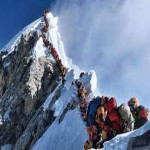
become so overcrowded that oftentimes climbers have to stand in line for hours
in freezing cold conditions to reach the top, where the air is so thin an
oxygen mask is needed to breathe. They walk single file at a snail’s pace over
the Hillary Step, the last obstacle before the summit. When climbers finally
reach the summit, there is barely room to stand because of overcrowding.
Each of those climbers spends weeks on the mountain,
adjusting to the altitude at a series of camps before advancing to the summit.
During that time, each person generates, on average, around eight kilograms (18
pounds) of trash, and the majority of this waste gets left on the mountain. The
slopes are littered with discarded empty oxygen canisters, abandoned tents,
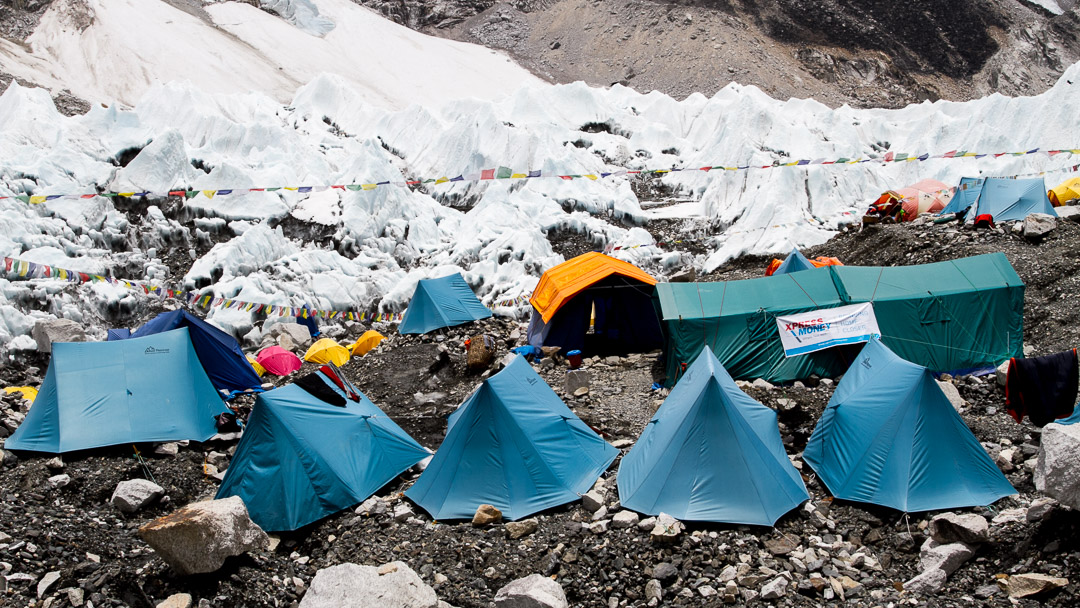
food containers, and even human feces. At Base Camp, there are tented toilets with
large collection barrels that can be carried away and emptied. But that is
where the toilet facilities end. For the rest of their expedition, climbers
have to relieve themselves on the mountain.